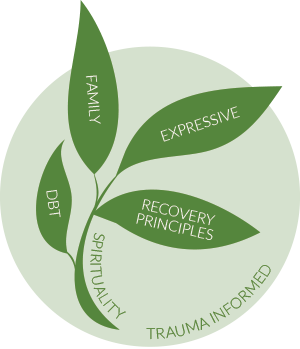
Timberline Knolls offers several types of therapy for women and girls who have been experiencing eating disorders, substance use disorders, the effects of trauma, mood disorders, and other mental health concerns. Therapy at our center incorporates the principles of dialectical behavior therapy (DBT), acceptance and commitment therapy (ACT), cognitive behavioral therapy (CBT), motivational interviewing, and 12-Step recovery.
Individual Therapy
Individual therapy sessions at Timberline Knolls are one-on-one conversations between you and a licensed therapist or another behavioral health professional. Individual therapy can be the ideal environment for you to process any successes or setbacks, address topics you may be hesitant to address in a group setting, and receive guidance or feedback.
During individual therapy sessions, you can discuss problems you have been having, set goals, and determine the steps you need to take to accomplish your objectives. Individual therapy can also help you identify negative thought patterns or self-defeating behaviors and make the changes that will allow you to achieve improved results.
At both the residential and partial hospitalization program (PHP) levels, you will usually have two individual therapy sessions each week.
Group Therapy
Group therapy is a fundamental element of care at the residential level and within our partial hospitalization program (PHP). A typical day at both levels includes multiple group therapy sessions.
Group therapy sessions usually involve a small number of women or girls who are receiving care, plus the licensed therapist or other experienced professional who is leading the session. You may participate in several types of groups at Timberline Knolls, including process groups, psychoeducational groups, and experiential groups.
Groups are safe and supportive places where you can process your experiences and share your insights. Group therapy also allows you to learn from others, practice healthy communication and conflict resolution skills, and share support.
Group therapy sessions for women and girls can address a wide range of topics, depending on which type of group is being conducted and who is participating. Common topics in group therapy sessions at Timberline Knolls include:
- Body image
- Medication education
- 12-Step education and support
- Coping skills
- DBT skills
- Food discovery
Family Therapy
Family therapy is a special type of group therapy, with participation limited to a treatment professional, the woman or girl who is receiving care with us, and a small number of her close family members, trusted friends, or other loved ones.
A family therapy session is a structured environment in which your loved ones can process how they’ve been impacted by your struggles. During family therapy sessions, you can address challenges or obstacles that have prevented you from functioning as a more cohesive unit, and you can work together to develop healthier communication patterns.
The topics addressed during family therapy are determined by what is most important to you and your loved ones. Family therapy sessions can help your loved ones learn more about the disorder you have been suffering from, what you are accomplishing at Timberline Knolls, and what type of support will most benefit you after you return home.
At the residential level, we typically offer family therapy on a weekly basis, with sessions led by a licensed therapist. Within our PHP, the frequency of family therapy sessions can vary, and these sessions may be led by a licensed therapist or another mental health specialist.
Experiential Therapies
Experiential therapies include a variety of dynamic, interactive, or hands-on activities. As a complement to conversation-based therapies, experiential therapies can provide new ways to express your emotions, cope with stress, and develop new skills and interests.
Experiential therapies can also help you discover innate talents or connect you with healthy pursuits you can continue after you have completed your time at Timberline Knolls. This type of therapy can be conducted on an individual basis, but it is more common in group settings.
Examples of experiential therapies at Timberline Knolls include art therapy, dance/movement therapy, sound therapy, music therapy, yoga therapy, recreation therapy, and therapeutic outings.
This content was reviewed and approved by the clinical staff at Timberline Knolls.
To view this embedded video, please edit your cookie preferences and allow Personalization cookies.
To view this embedded video, please edit your cookie preferences and allow Personalization cookies.